
Project case study · CS-13 · Collegiate sports turf
Washburne Stadium
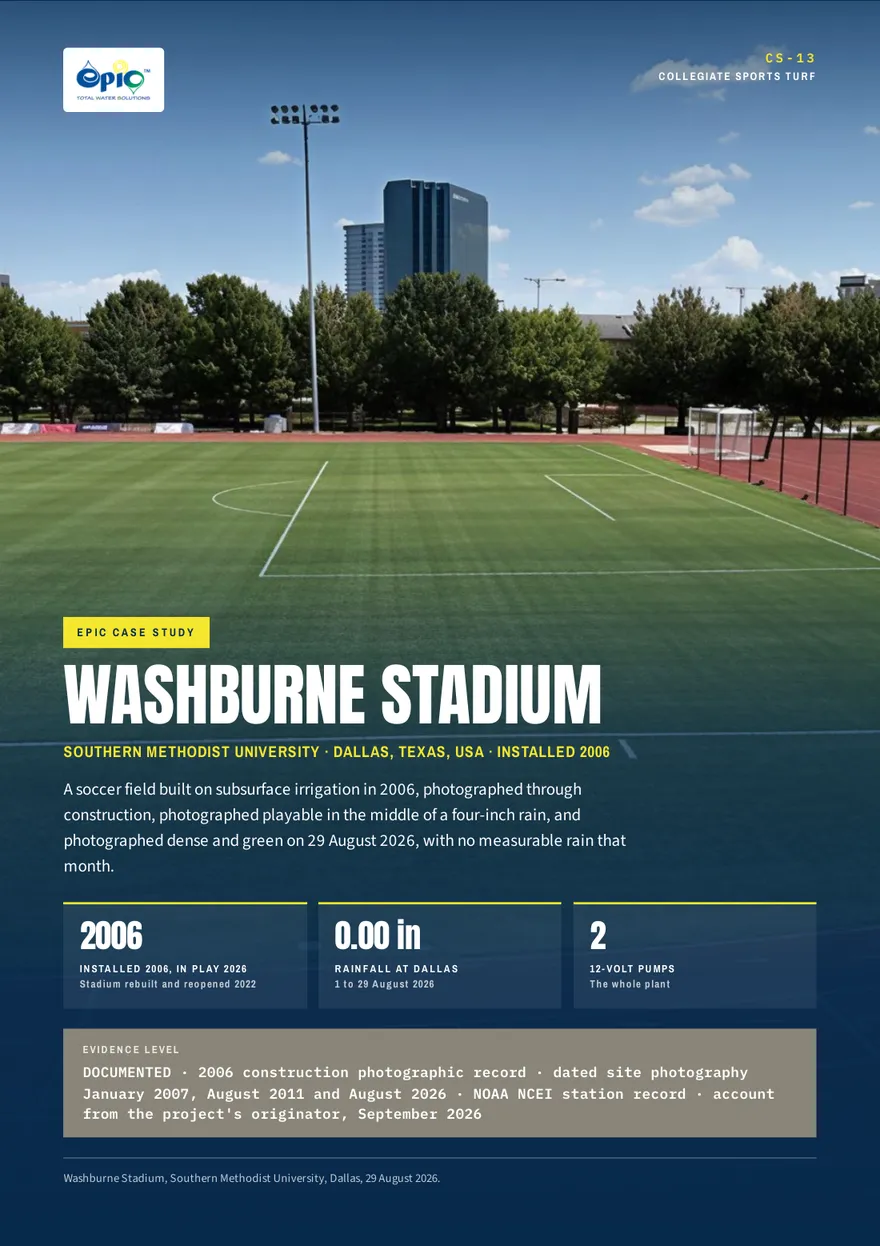
Southern Methodist University · Dallas, Texas, USA · Installed 2006. A soccer field built on subsurface irrigation in 2006. It was photographed during construction, playable in the middle of a four-inch rain, and dense and green on 29 August 2026, with no measurable rain that month.
- Reference
- CS-13
- Edition
- 2 · September 2026
- Format
- PDF · 5 pages · 0.9 MB
- Access
- Open
About this case study
The soccer field at Westcott Field, Southern Methodist University, Dallas. It was rebuilt in 2006 on a sealed EPIC subsurface system in time for that autumn's games. The field sits inside the Morrison-Bell running track, and the whole plant is two 12-volt sump pumps and an irrigation controller. The stadium was rebuilt and reopened in 2022; according to J.W. Davis, the 2006 subsurface system was carried through that work unaltered.
Hemmed in by the track, the old surface was hard to drain and hard to keep good enough to host home playoff matches. In 2006 the new soccer coach asked for help with the surface. J.W. Davis, a former SMU letterman who had backed the soccer programme and sat on the hiring committee, went looking for a technology that would fix the drainage problem rather than just manage it.
A geomembrane liner went down over the prepared subgrade. EPIC chambers and pipework were laid on the liner, followed by gravel, the sand profile and rolled sod. The grass draws moisture from below by capillary action, and what the plants take up, not a timer, sets how much water leaves the sand. When it rains the flow reverses: water moves down into the chambers and overflows to storage and the city storm system. There are no sprinklers or overhead spray.
The site has no water meter or control plot. Its record is photographic, checked against weather station data. On 13 January 2007, in the middle of a four-inch rain, the field was photographed playable. On 29 August 2026 it showed full, dense, even cover. That followed 29 days of August with no measurable rain at Dallas Love Field and a summer peak of 109°F on 22 July. Unwatered ground nearby showed bare soil and cracked clay.
Project record
- Site
- The soccer field at Westcott Field, Southern Methodist University, Dallas, Texas
- Installed
- 2006, ready for that autumn's competition
- Surface
- Natural grass, laid as rolled sod on a sand profile over EPIC chambers and geomembrane. The field is flat.
- Delivery
- Subsurface, below grade, direct to the root zone. No sprinklers, no overhead spray, and no irrigation water reaching the playing surface.
- Plant
- Two 12-volt sump pumps and an irrigation controller, with a solar panel at installation
- Setting
- The field sits inside the Morrison-Bell running track, which is what made draining it difficult
- Originated by
- J.W. Davis, who located the technology for the university in 2006
- Weather record
- NOAA NCEI daily summaries, Dallas Love Field station USW00013960, 1 March to 29 August 2026 (182 days)
- Peak temperature
- 109°F, 22 July 2026
- Days at or above 105°F
- 9
- Rainfall, 1 to 29 August 2026
- 0.00 in, no measurable precipitation
- Rainfall, July 2026
- 0.60 in on five days, four under 0.10 in
On site, in the order it happened
12 dated photographs from the site record, in the order they were taken.
2006How it was built
-
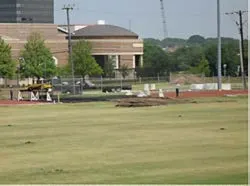
01 2006BeforeThe old surface, boxed in by the track. -
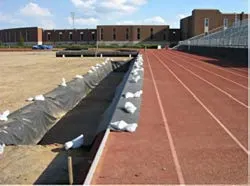
02 2006LinerGeomembrane down in the excavation. -
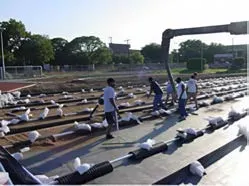
03 2006ChambersChambers and pipework on the liner, sandbagged. -
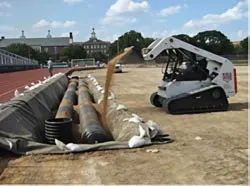
04 2006StorageStorage and conveyance at the head of the field. -
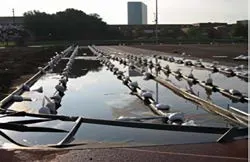
05 2006Flood testThe lined basin charged and standing full. -
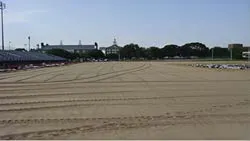
06 2006Sand profileSand over the chambers, the layer capillary rise works through. -
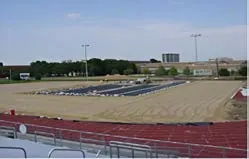
07 200690 per centGraded out to the track edge, ready for sod.
January 2007 to August 2026The record in pictures
-
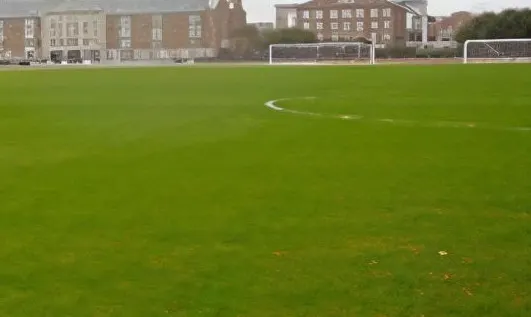
08 13 January 2007Five months inPlayable in the middle of a four-inch rain, the problem the field was rebuilt to solve. -
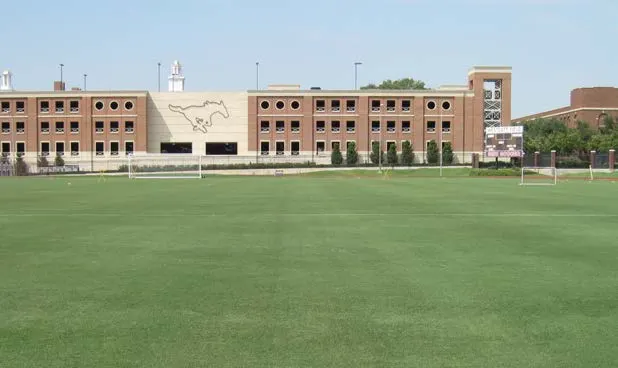
09 August 2011Five years inThe last summer the operations staff were in regular contact with the installer. -
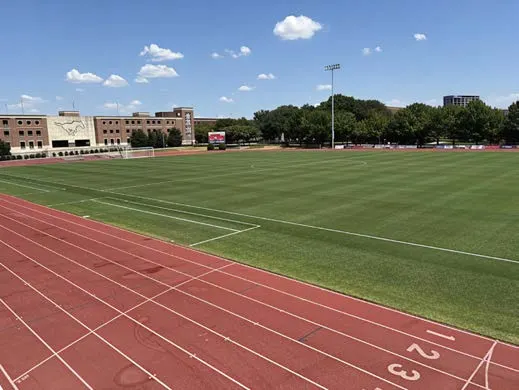
10 29 August 2026Twenty years onDense and uniform at the end of a calendar month with no measurable rainfall. -
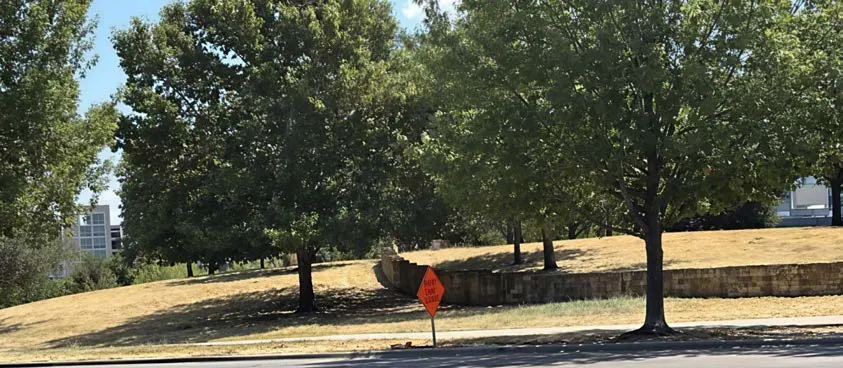
11 29 August 2026Nearby, same dayUntreated turf gone dormant, green surviving only under the tree canopy. -
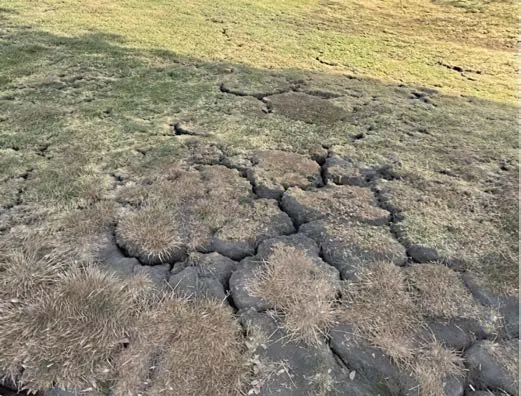
12 29 August 2026Unirrigated groundUnirrigated ground a short walk away: bare soil and desiccation cracking as the clay dries.
Read it with
Service Life of the Buried System
The service-life case for the buried profile and the evidence it rests on.
Open8 pages

Water Delivery & Drainage
The governing hydraulics: flow rates, profile storage and charging behaviour.
On request26 pages
Working on a project? Send us the drawings, the bill of quantities or the question.
Talk to usPublished by EPIC Total Water Solutions LLC, Reno, Nevada. Issued in the Middle East and North Africa by Xpitrade General Trading LLC.